

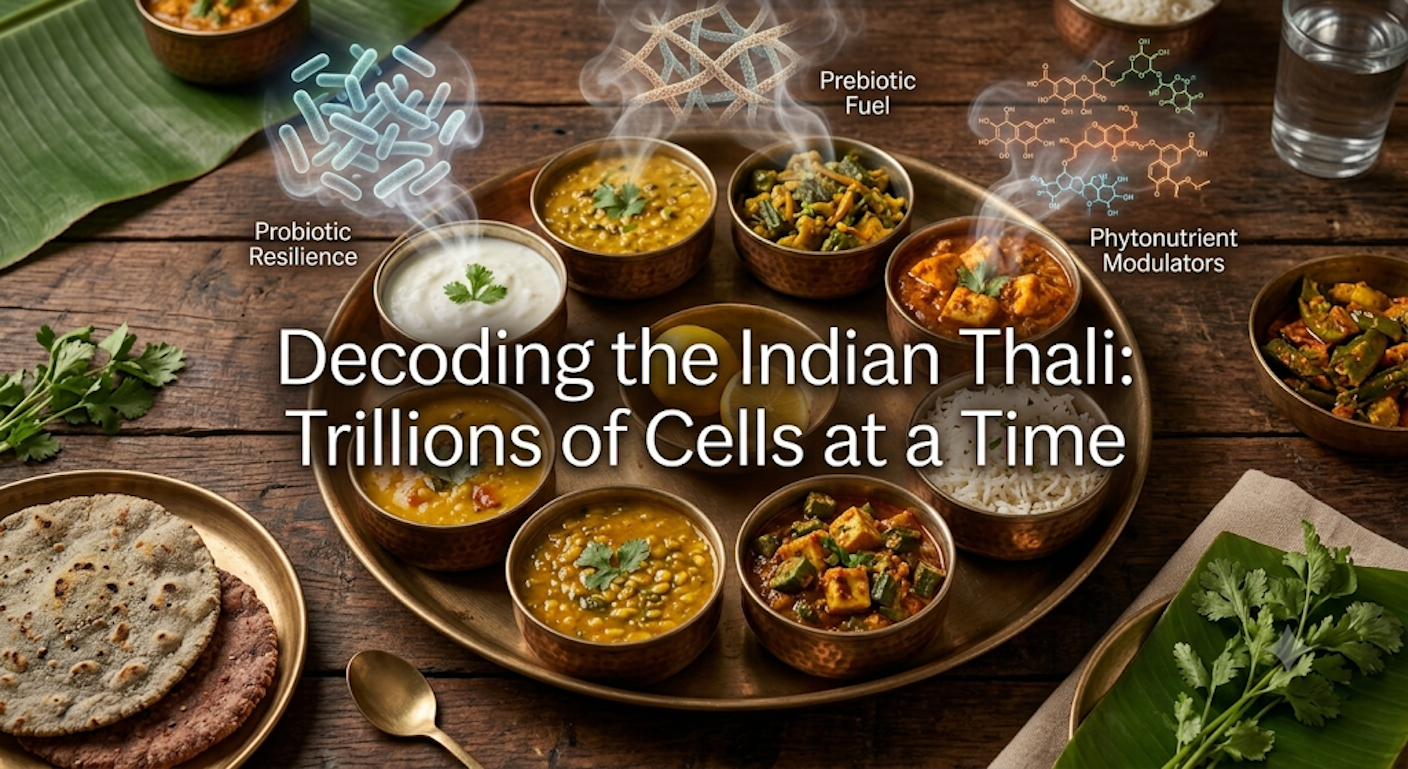
Decoding the Indian Thali: Trillions of Cells at a Time 🍲🧬
In India, when we see a beautifully presented Thali — whether Gujarati, South Indian, or Assamese — our brain registers flavor. Our heritage registers tradition.
But from the perspective of modern biology, that vibrant plate is something else entirely:
It's a precision-engineered bio-delivery system.
Every Katori on a Thali is curated to feed trillions of cells — specifically the microbial cells in our gut. We often think of nutrition as simply macronutrients (carbs, proteins, fats), but the true genius of the Indian meal lies in how it nurtures our Gut Microbiome.
Let's break down the biological blueprint of a balanced Thali:
The Biological Blueprint
Prebiotics
Our gut lining depends on fiber that our bodies can't digest. The variety of complex, fiber-rich lentils (Dals), vegetables, and ancient millets act as essential prebiotics. Even the atta used for our daily rotis is whole wheat, retaining the structural bran that acts as a primary "fertilizer" for the gut — allowing beneficial strains of Bifidobacteria and Lactobacillus to flourish.
Probiotics
The presence of Dahi (curd) or buttermilk (Chaas) provides live bacterial cultures. Beyond dairy, traditionally made achaars (pickles) — fermented naturally under the sun without artificial preservatives — are an exceptional source of native probiotics. When consumed together with a prebiotic-rich meal, they create a synergistic effect known as Synbiotics, drastically improving digestive resilience.
Microbiome Modulators & Fibers
The fresh chutneys on the plate provide raw, prebiotic fiber and green, flavor-enhancing enzymes. When prepared traditionally on a stone sil-batta, the crushing action preserves cellular integrity and releases volatile oils without heat degradation. Paired with an intense spectrum of spices — turmeric's curcumin, cumin, and black pepper — these elements act as potent modulators, helping inhibit pathogens while selectively supporting healthy bacterial populations.
The Social Genome
In an era of hyper-processed foods and rising metabolic and immune diseases, we are learning that our health isn't defined solely by our human genome, but by our Social Genome — the microbial community we maintain through shared, traditional meals.
When we step away from diverse Thali-style eating toward mono-diets or highly refined, sterile Westernized meals, we risk compromising this vital ecosystem.
The genius of the ancient Indian Thali isn't just in its taste — it's in its ability to support diversity. When we eat a Thali, we aren't just eating for one; we are feeding the dynamic, interconnected ecosystem of our bodies.
"It's time to move beyond counting calories and start counting the diversity we bring to our microbial partners."
💬 Let's Discuss
What traditional element of an Indian meal do you think is most overlooked for its health benefits? Let's discuss below. 👇